Knee pain can come from a minor sprain or something more serious, like a fracture or early arthritis. A Knee X-Ray is usually the first test doctors recommend because it is quick, painless, and shows the condition of the bones and joint clearly. This guide explains the common signs that point to a Knee X-Ray, why doctors order one, and how to get an accurate Digital X-Ray done at a trusted Diagnostic Centre in Indore.
What Is a Knee X-Ray and Why Does It Matter?
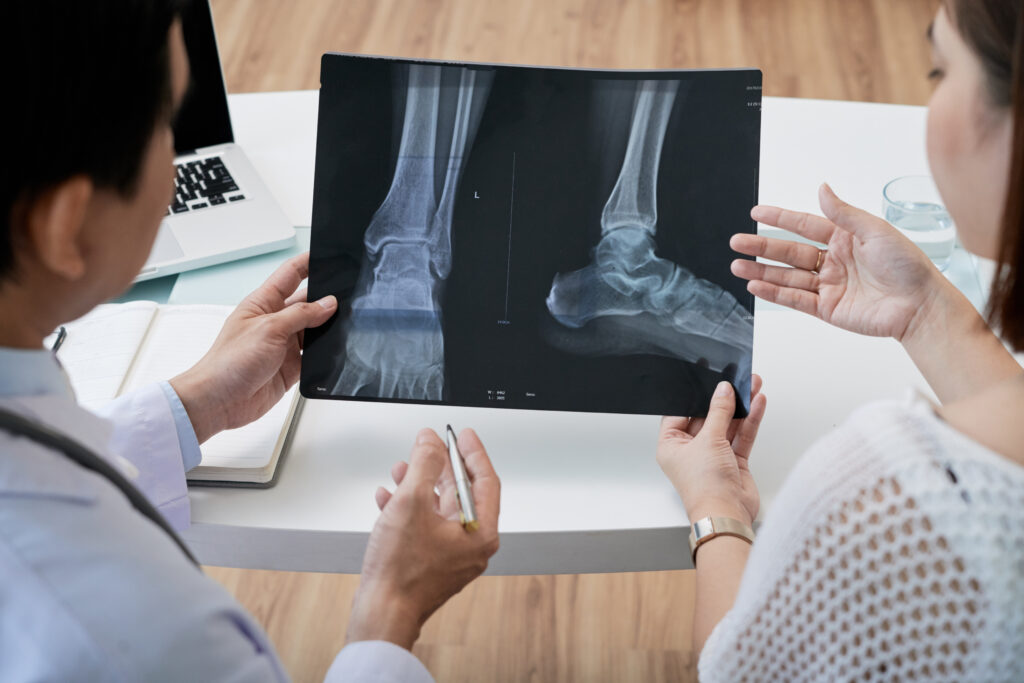
A knee X-ray is an imaging test that uses a small, safe amount of radiation to capture images of the bones, joint space, and alignment of your knee. It helps doctors check for fractures, joint dislocation, bone spurs, and osteoarthritis, and it is often the very first step before any other imaging test is even considered.
Unlike an MRI, which shows soft tissue such as ligaments and cartilage, an X-ray focuses on bone health and joint alignment. This makes it the right starting point when your doctor needs a fast, reliable answer about what is happening inside your knee joint.
Common Signs You May Need a Knee X-Ray
Not every knee ache needs imaging, but certain symptoms are strong indicators that a Knee X-Ray is necessary. Below are the most common signs doctors look for before recommending one.
- Persistent or worsening knee pain that does not improve with rest, ice, or over-the-counter medication
- Swelling around the knee joint that appears suddenly or lasts more than a few days
- Difficulty bending or straightening the knee, especially if flexion is limited beyond 90 degrees
- Visible deformity or misalignment of the knee after a fall, twist, or impact
- Inability to bear weight on the affected leg, even for a few steps
- A popping or grinding sound during movement, which can indicate joint damage
- Tenderness directly over the kneecap or bone, rather than the surrounding soft tissue
- Knee pain in adults over 55 years, since age itself raises the likelihood of arthritis-related changes
If you notice two or more of these signs together, it is a good time to consult your doctor about a Digital X-Ray in Indore appointment rather than waiting for the pain to resolve on its own.
Top Reasons Doctors Recommend a Knee X-Ray
1. Suspected Fracture After an Injury
Falls, sports injuries, and road accidents are the most common reasons a Knee X-Ray gets ordered. Doctors use a well-established clinical guideline called the Ottawa Knee Rule to decide when imaging is truly needed, based on factors like age, tenderness, and the ability to walk after injury.
2. Osteoarthritis and Joint Degeneration
As cartilage wears down over time, the space between the bones in your knee narrows. An X-ray taken while standing (called a weight-bearing view) shows this narrowing clearly, along with bone spurs that often form as the joint tries to compensate.
3. Unexplained Swelling or Fluid Buildup
Swelling can be a sign of fluid collecting inside the joint, known as an effusion. A knee X-ray helps confirm whether fluid buildup is present and gives your doctor clues about whether the cause is an injury, infection, or inflammatory condition.
4. Chronic Knee Pain That Does Not Improve
If knee pain has lasted for several weeks despite rest and basic care, imaging helps rule out structural problems like bone thinning, misalignment, or early-stage arthritis that would otherwise go unnoticed.
5. Post-Surgery or Post-Fracture Follow-Up
If you have had a knee fracture treated or a knee replacement done, your doctor will likely order routine follow-up X-rays. These confirm that the bone is healing correctly and that any implants remain properly positioned.
6. Before Starting Physiotherapy or Sports Training
Athletes and fitness enthusiasts sometimes need a baseline Knee X-Ray before starting an intense training program, especially if there is a history of old injuries or recurring discomfort.
Knee X-Ray vs MRI: Which One Do You Need?
Patients often ask whether they need an X-ray or an MRI, and the answer depends on what the doctor suspects.
| Feature | Knee X-Ray | Knee MRI |
| Best for | Bones, fractures, arthritis, alignment | Ligaments, tendons, cartilage, meniscus |
| Scan time | 5–10 minutes | 20–40 minutes |
| Radiation | Very low dose | None |
| Cost | Lower | Higher |
| First-line test | Usually yes | Usually no, ordered after X-ray if needed |
In most cases, doctors start with an X-ray because it is faster, more affordable, and answers the most urgent question first: is the bone broken or not. If the X-ray looks normal but symptoms continue, an MRI may follow to check soft tissue.
What Happens During a Knee X-Ray?
A Digital X-Ray procedure is simple and takes only a few minutes from start to finish.
- You will be asked to remove any metal objects, jewelry, or accessories near the knee.
- A radiology technician positions your leg and knee for two or three different angles.
- You will need to hold still for a few seconds while each image is captured.
- The digital images are ready almost instantly for the radiologist to review.
- Your report is typically shared with your doctor within a few hours.
Because it uses digital sensors instead of traditional film, a Digital X-Ray produces sharper images with even lower radiation exposure, which is one reason most modern diagnostic centres have moved away from film-based systems.
Why Choose Ultrasound Diagnostic Centre for Your Knee X-Ray
Getting an accurate diagnosis starts with choosing the right facility. Ultrascan Diagnostic Centre is recognized as one of the best diagnostic centre in Indore for musculoskeletal and orthopedic imaging, with experienced radiologists and modern Digital X-Ray equipment.
- Advanced digital imaging technology for sharper, faster results
- Experienced radiologists who review every scan personally
- Same-day reports shared directly with your referring doctor
- Clean, patient-friendly environment with minimal wait times
- Transparent pricing with no hidden charges
As a trusted Diagnostic Centre in Indore, Ultrascan Diagnostic Centre combines accuracy with comfort, so you get answers about your knee health without unnecessary delays or repeat visits.
Quick Self-Check: Do You Need a Knee X-Ray?
Ask yourself the following before booking an appointment:
- Has the pain lasted more than a week without improvement?
- Did the pain start after a fall, twist, or direct impact?
- Is there visible swelling, bruising, or deformity?
- Are you unable to walk normally or bear weight?
- Are you over 55 and experiencing new knee stiffness or pain?
If you answered yes to even one of these, it is worth speaking to your doctor about getting a Knee X-Ray rather than waiting it out.
Frequently Asked Questions
1. Is a Knee X-Ray painful?
No, a knee X-ray is completely painless. You may need to hold a specific position for a few seconds, but there is no discomfort during the scan itself.
2. How much radiation exposure does a knee X-ray involve?
A single knee X-ray involves a very low radiation dose, generally considered safe for occasional diagnostic use as recommended by your doctor.
3. Can a Knee X-Ray detect ligament or meniscus tears?
No, X-rays show bones and joint alignment, not soft tissue. If a ligament or meniscus injury is suspected, your doctor may recommend an MRI in addition to the X-ray.
4. How long does it take to get knee X-ray results?
With a Digital X-Ray, images are available almost immediately, and most diagnostic centres share the final report within a few hours on the same day.
5. Should I get a knee X-ray for mild, occasional pain?
Mild pain that improves with rest usually does not require imaging right away. However, if the pain is persistent, recurring, or linked to an injury, it is safer to get it checked with an X-ray.
Conclusion
Knee pain should never be ignored, especially when it comes with swelling, stiffness, or difficulty walking. A Knee X-Ray gives your doctor the clarity needed to rule out fractures, arthritis, and other bone-related issues quickly and affordably. Getting the right scan early can prevent small issues from becoming long-term problems.
Book your Knee X-Ray today at Ultrascan Diagnostic Centre, one of the most trusted names for Digital X-Ray Indore residents rely on. Walk in or call ahead to schedule your appointment and get accurate, same-day results reviewed by experienced radiologists.