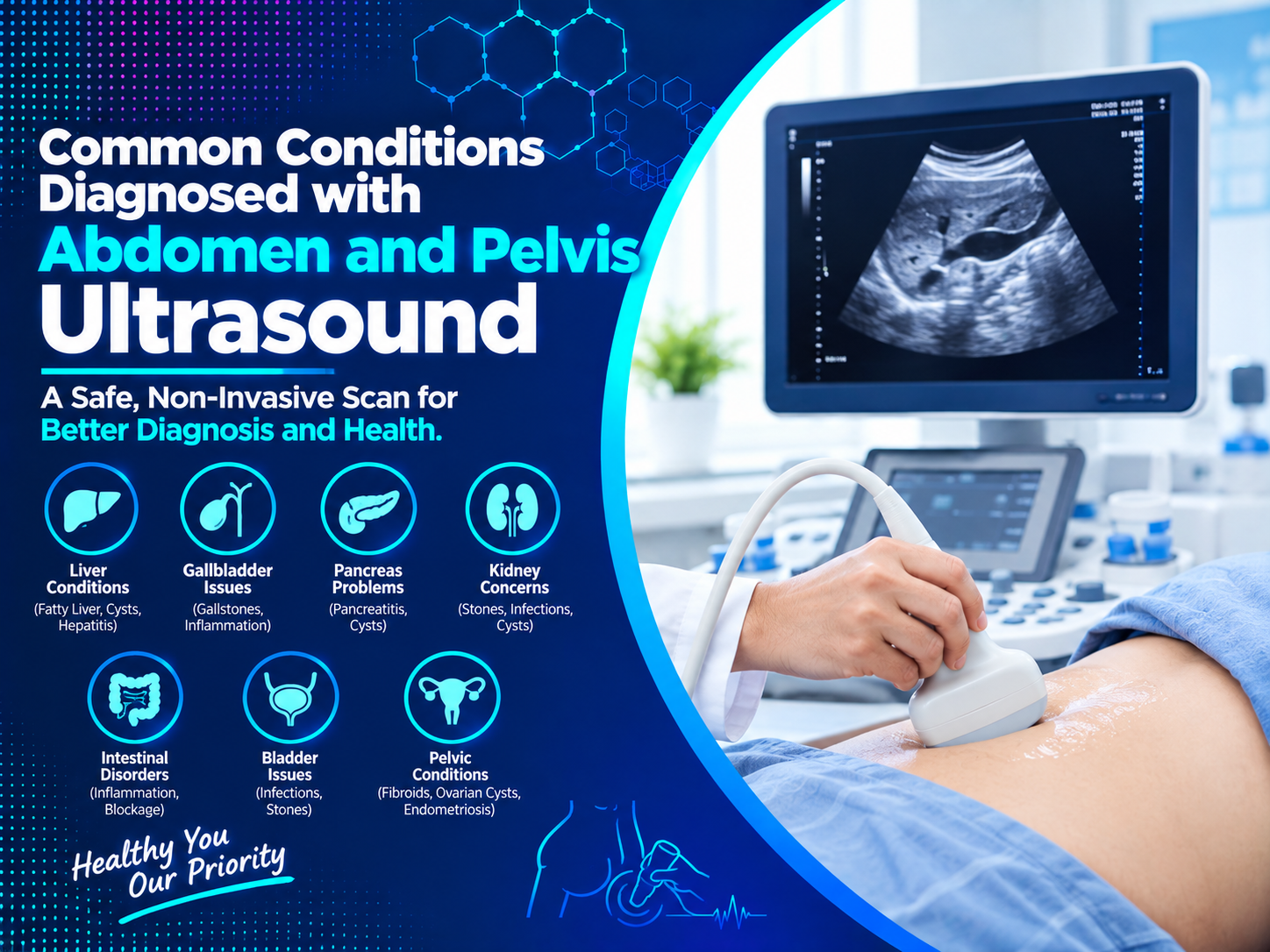
Pelvic pain, heavy periods, or trouble conceiving can have many causes, and guessing rarely helps. A Pelvic Ultrasound gives your doctor a clear, live view of the organs in your lower abdomen, so the real cause can be found sooner. This guide explains five reasons this simple scan is so useful, and how to prepare for your appointment.
What Is a Pelvic Ultrasound?
A pelvic ultrasound uses sound waves to create live images of the pelvic organs, with no radiation. In women, it examines the uterus, cervix, ovaries, fallopian tubes, and bladder. In men, it can also assess the bladder and prostate.
- Painless: only gel and a probe are used
- Safe: it can be repeated when needed
- Quick: most scans are done in a short visit
The 5 Reasons at a Glance
- It shows the uterus and ovaries clearly
- It finds the cause of pelvic pain and abnormal bleeding
- It detects ovarian cysts and PCOS-related changes
- It supports fertility and early pregnancy checks
- It tracks conditions over time without radiation
Reason 1: A Pelvic Ultrasound Shows the Uterus and Ovaries Clearly
The scan reveals the size, shape, and position of the uterus and ovaries, along with the thickness of the uterine lining. This helps doctors spot fibroids, polyps, scars, and differences in uterine shape. Women searching for a Pelvic Ultrasound in Indore often start here, because a clear picture guides every next step.
Reason 2: It Finds the Cause of Pelvic Pain and Abnormal Bleeding
Ultrasound is one of the first tests for pain and unusual bleeding. According to RadiologyInfo, it helps explain pelvic pain, abnormal vaginal bleeding, menstrual problems, and infertility.
- Fibroids: non-cancerous growths that can cause heavy bleeding
- Adenomyosis: a condition that can cause painful, heavy periods
- Polyps: small growths in the uterine lining
- Ovarian torsion and pelvic infection: causes of sudden or severe pain
Reason 3: It Detects Ovarian Cysts and PCOS-Related Changes
Ovarian cysts are common, and most are harmless. Ultrasound shows their size and type, so your doctor can decide whether to watch, treat, or investigate further. It can also show many small follicles, one of the features doctors consider when diagnosing polycystic ovary syndrome (PCOS).
Remember that PCOS is diagnosed using symptoms, hormone tests, and scans together, not by a scan alone. Hormone blood tests such as LH, FSH, and testosterone often accompany the scan.
Reason 4: It Supports Fertility and Early Pregnancy Checks
When pregnancy is delayed, doctors look at the uterus, ovaries, and follicle growth. Ultrasound can also guide timing of ovulation and confirm that an early pregnancy is in the right place. A 3D pelvic ultrasound in Indore may add detail about the outer shape of the uterus and any irregularities.
Reason 5: It Tracks Conditions Over Time Without Radiation
Because ultrasound uses no radiation, it is ideal for follow-up. Doctors can watch whether a fibroid is growing, whether a cyst has settled, or how a treatment is working. Regular Pelvic Scans in Indore let you compare results across visits without worry about repeated exposure.
When Does 3D Pelvic Imaging Add Value?
A standard 2D scan is enough for most concerns. In selected cases, such as unusual uterine shape, suspected polyps, or repeated fertility difficulty, 3D views give a fuller picture. Some studies also suggest 3D scans can show the uterine cavity and the position of an intrauterine device more clearly. Ask your doctor whether 3D USG Pelvic Scans in Indore would help in your situation.
Transabdominal vs Transvaginal Pelvic Ultrasound
| Feature | Transabdominal | Transvaginal |
| Probe position | Over the lower abdomen | Placed gently inside the vagina |
| Bladder | Usually full | Usually empty |
| Best for | Larger organs and overall view | Finer detail of ovaries and uterus |
| Comfort | Painless | Mild pressure, not usually painful |
Many doctors start with the abdominal approach and add the transvaginal scan when more detail is needed.
How Often Should You Have One?
This scan is not a routine screening test for every woman. It is usually advised when you have symptoms, a fertility concern, or a condition that needs follow-up. Your doctor will set the timing based on what is being monitored.
Pelvic Ultrasound for Men
Men can also benefit from pelvic imaging. The scan can assess the bladder and prostate, and it helps explain urinary symptoms such as difficulty passing urine or incomplete emptying. Preparation is similar, with a full bladder often required.
Symptoms That Mean You Should Book a Pelvic Ultrasound
- Pelvic or lower abdominal pain
- Heavy, irregular, or very painful periods
- Bleeding between periods or after menopause
- Difficulty conceiving
- A feeling of pelvic pressure or swelling
- Frequent urination with pelvic discomfort
When to Seek Urgent Care
Do not wait for a routine appointment if you have any of these.
- Sudden, severe pelvic pain
- Very heavy bleeding that soaks through pads quickly
- Fever with pelvic pain
- Dizziness or fainting with pain
What to Expect During Your Pelvic Ultrasound Appointment
- You will be told whether to arrive with a full or empty bladder.
- You lie down, and gel is applied for an abdominal scan.
- If a transvaginal scan is needed, it is explained first and done gently.
- The sonographer takes images and measurements.
- A doctor reviews the images and shares a report with your referring doctor.
Wear comfortable clothing, and tell the team if you are or may be pregnant.
What a Pelvic Scan Cannot Show
Ultrasound is powerful, but it has limits. Some conditions, such as small patches of endometriosis, may not be visible, and a suspicious finding may need an MRI, blood tests, or a tissue sample to confirm. A normal scan is reassuring, but doctors always read it together with your symptoms.
Common Myths About Pelvic Scans
- Myth: It is only for pregnant women. Fact: It is used for many pelvic health concerns in women and men.
- Myth: Every ovarian cyst needs surgery. Fact: Many cysts are harmless and settle on their own.
- Myth: A normal scan rules out every problem. Fact: Some conditions need additional tests.
Tips to Prepare for Your Scan
- Follow the bladder instructions you are given
- Carry earlier scan reports and prescriptions
- Note the date of your last period
- Write down your symptoms and questions
- Use one Diagnostic Centre in Indore for follow-up scans so your records stay together
Choosing Where to Get Scanned
Look for trained sonographers, clear reports, and a comfortable, respectful environment. Many people searching for the best diagnostic centre in Indore also value having scans and blood tests in one place. Ultrascan Diagnostic Centre offers ultrasound and pathology services, so related checks can be planned together.
Frequently Asked Questions
1. Is a pelvic ultrasound painful?
An abdominal scan is painless. A transvaginal scan may cause mild pressure, but it should not be significantly painful.
2. Do I need a full bladder for a pelvic scan?
For an abdominal scan, usually yes, because it improves image clarity. For a transvaginal scan, the bladder is usually emptied first.
3. Can a pelvic ultrasound detect PCOS?
It can show follicles and ovarian features linked to PCOS, but diagnosis also needs symptoms and hormone tests.
4. Is a pelvic ultrasound safe?
Yes. It uses sound waves instead of radiation and can be repeated when needed.
5. How long does the appointment take?
Most scans are completed in a short visit, but timing varies. Ask the centre for an estimate when you book.
Conclusion
A Pelvic Ultrasound is a gentle, radiation-free scan that can turn vague symptoms into clear answers. From fibroids and cysts to fertility checks and long-term monitoring, it gives doctors the information they need to act early.
Book your pelvic scan at Ultrascan Diagnostic Centre today. Call ahead or walk in to plan your visit. This article is for general information and does not replace advice from your doctor.