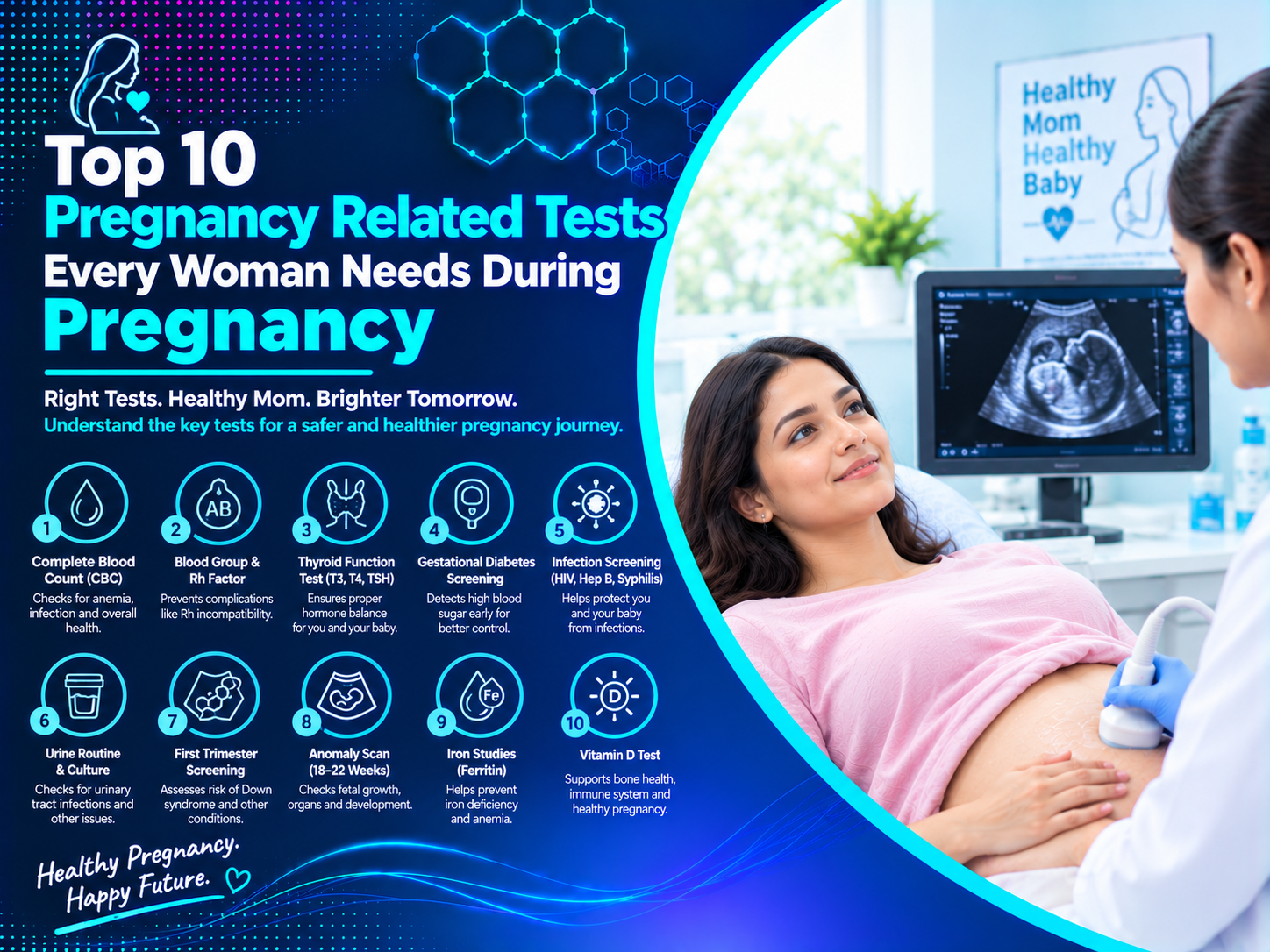
A healthy pregnancy is built on timely checks, not guesswork. The 10 Pregnancy Related Tests in this guide help your doctor confirm the pregnancy, protect your health, and track your baby’s growth from the first week to delivery. Here is what each test does, when it is usually done, and what to expect.
The 10 Pregnancy Related Tests at a Glance
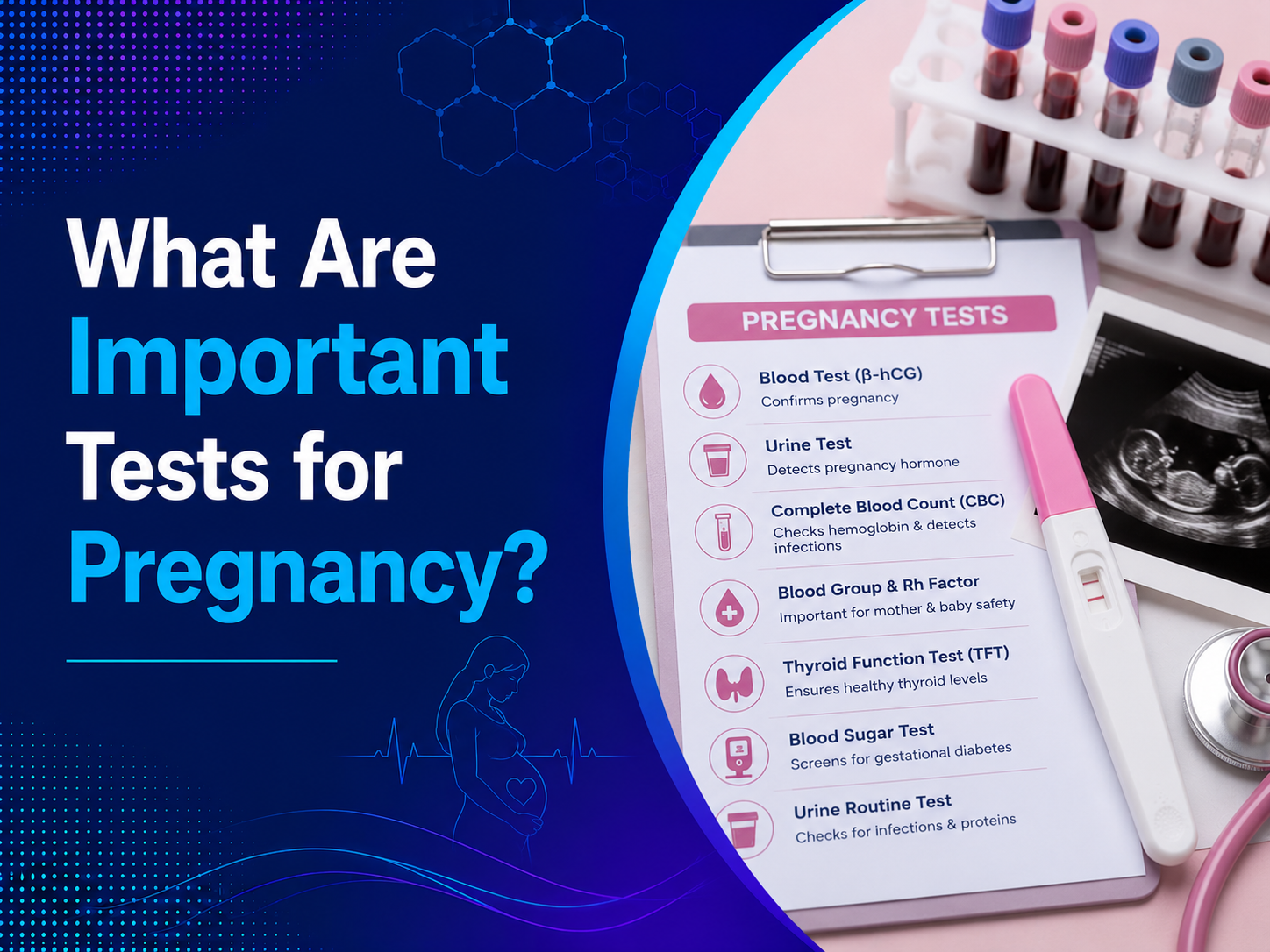
The ten key tests are an early pregnancy test, blood group and Rh factor, a complete blood count, infection screening, urine tests, first trimester screening, the anomaly scan, glucose screening, a growth scan, and a Group B strep swab. Exact timing depends on your doctor and your health.
Why These Pregnancy Related Tests Matter
Many pregnancy complications, such as anemia, infections, and gestational diabetes, can develop without obvious symptoms. Routine tests find them early, when treatment is simple and effective. They also give you a clear record of how your pregnancy is progressing.
Screening vs Diagnostic Tests: What Is the Difference?
Screening tests, such as the double marker test, estimate risk and do not give a final answer. Diagnostic tests, such as amniocentesis, confirm or rule out a condition. If a screening result is high risk, your doctor will explain the next step instead of leaving you to guess.
First Trimester: Pregnancy Related Tests 1 to 6
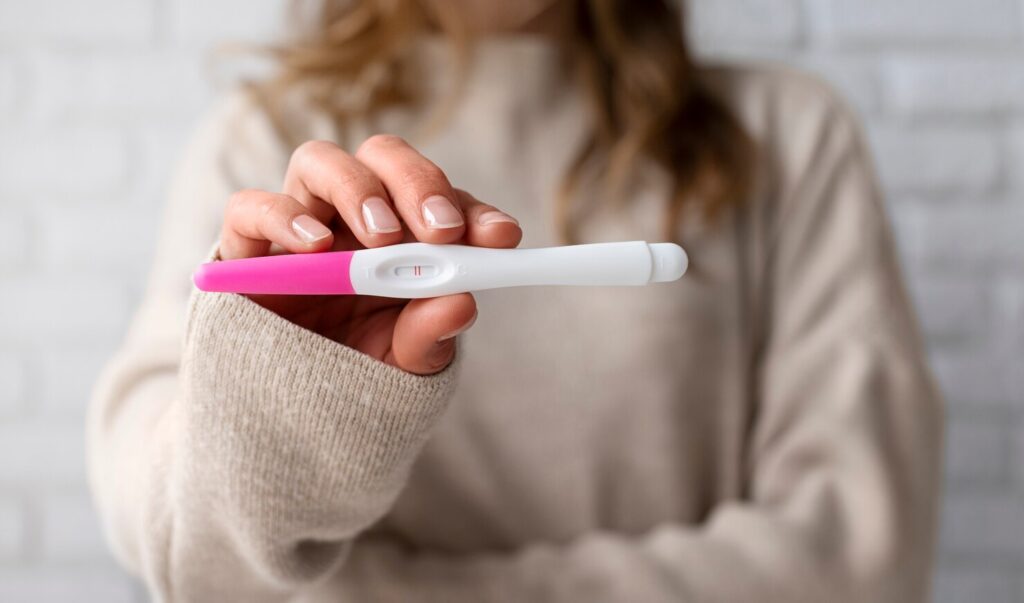
1. Early Pregnancy Test
A urine or blood test detects the hormone hCG, which rises soon after conception. A blood test can sometimes confirm pregnancy earlier than a home kit. Many women look for an Early Pregnancy Test in Indore to confirm results before the first doctor visit, and an early scan may follow to confirm dating.
2. Blood Group and Rh Factor
This test shows your blood type and whether you are Rh positive or negative. If you are Rh negative, your doctor may advise an injection to prevent complications for future pregnancies. Rh-negative mothers usually have a repeat antibody check around 24 to 28 weeks.
3. Complete Blood Count (CBC)
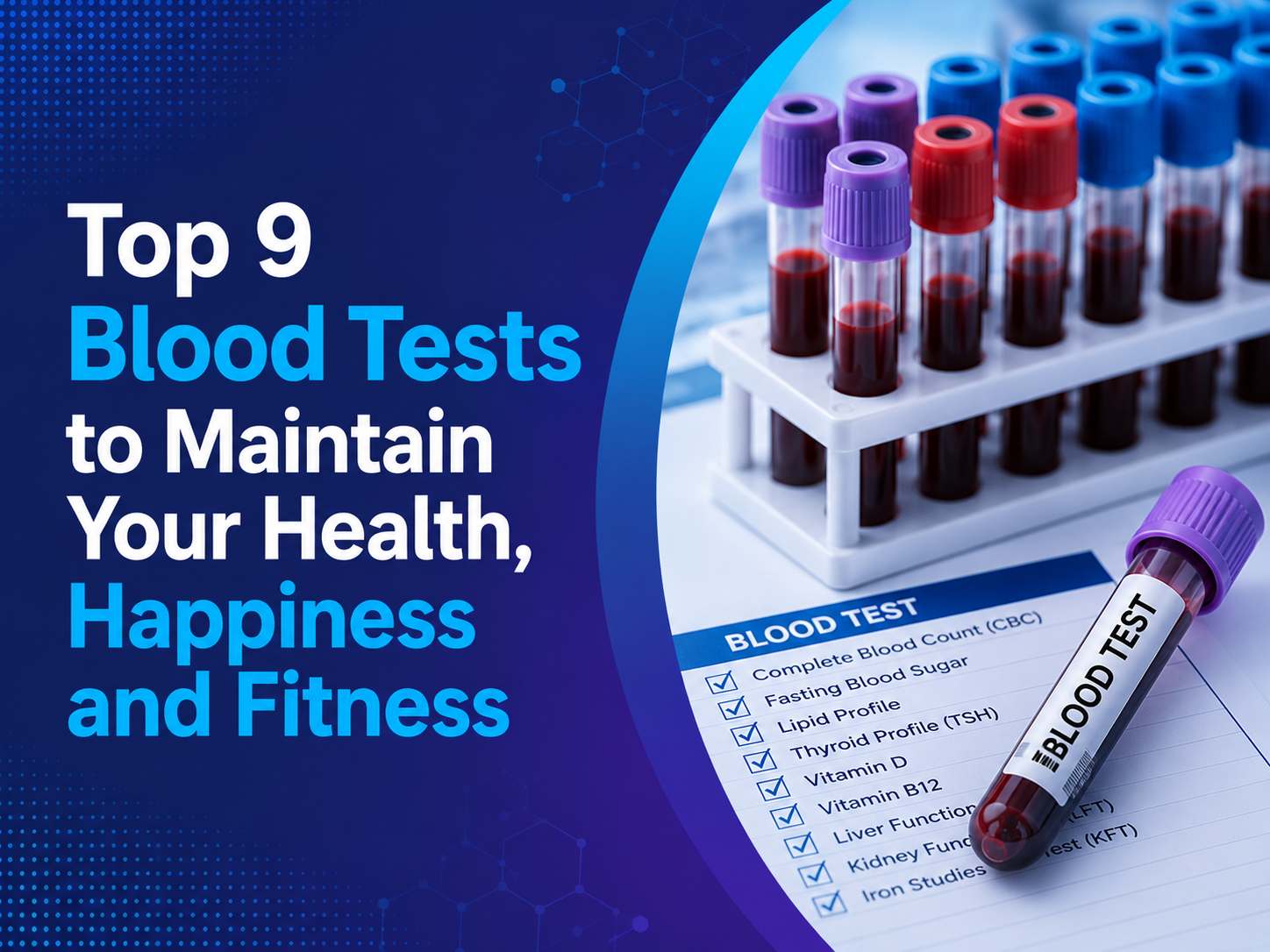
A CBC checks red cells, white cells, and platelets. Its main job in pregnancy is to spot anemia, which is common because your blood volume increases. It is often repeated later so low iron can be treated in time.
4. Infection Screening
Blood tests screen for infections such as HIV, hepatitis B, and syphilis, and check immunity to rubella. Finding an infection early lets doctors protect both you and your baby. These checks are usually part of the Obstetrics Routine Tests in Indore ordered at your first visit.
5. Urine Tests
A urine test checks for protein, sugar, and signs of infection. Urinary infections are common in pregnancy and can cause complications if untreated, so a urine culture is often added. Sample collection takes only a minute.
6. First Trimester Screening and Early Scan
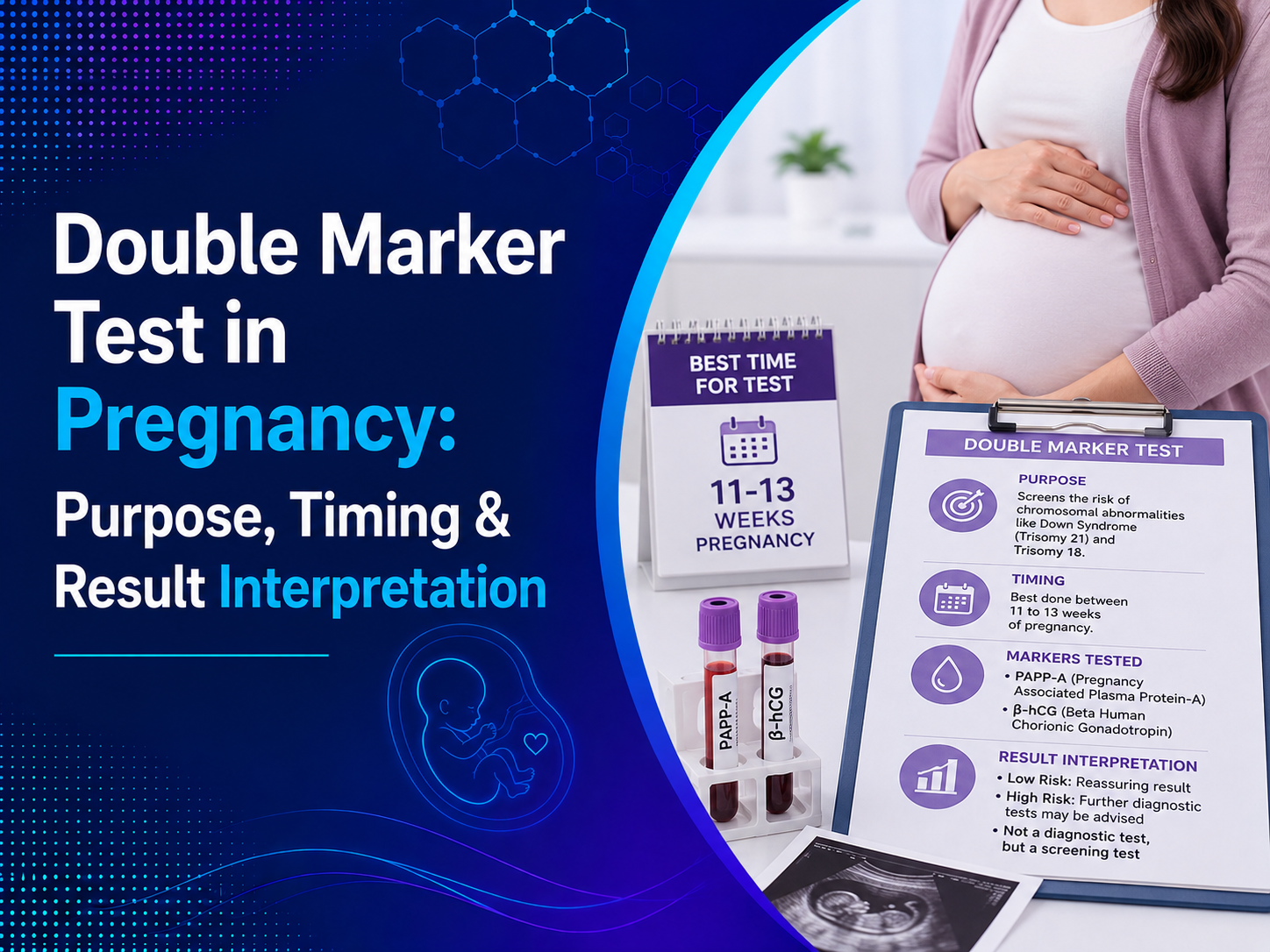
Between 11 and 13 weeks 6 days, the double marker blood test is combined with a nuchal translucency scan to estimate the chance of certain chromosomal conditions. This is screening, not a diagnosis. An Early Anomaly Scan in Indore can also check how the baby is developing at this stage.
Second Trimester: Pregnancy Related Tests 7 and 8
7. Anomaly (Target) Scan
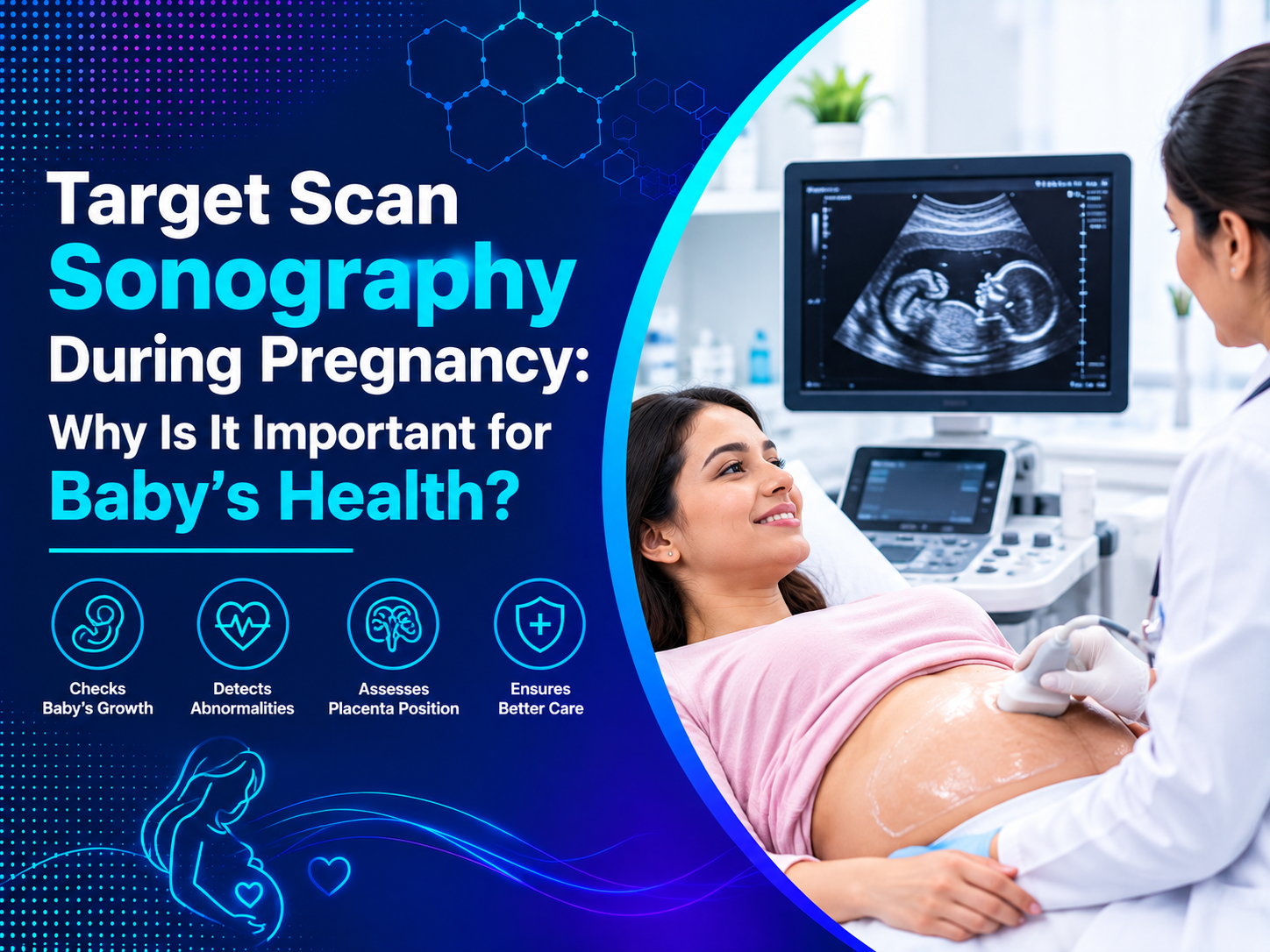
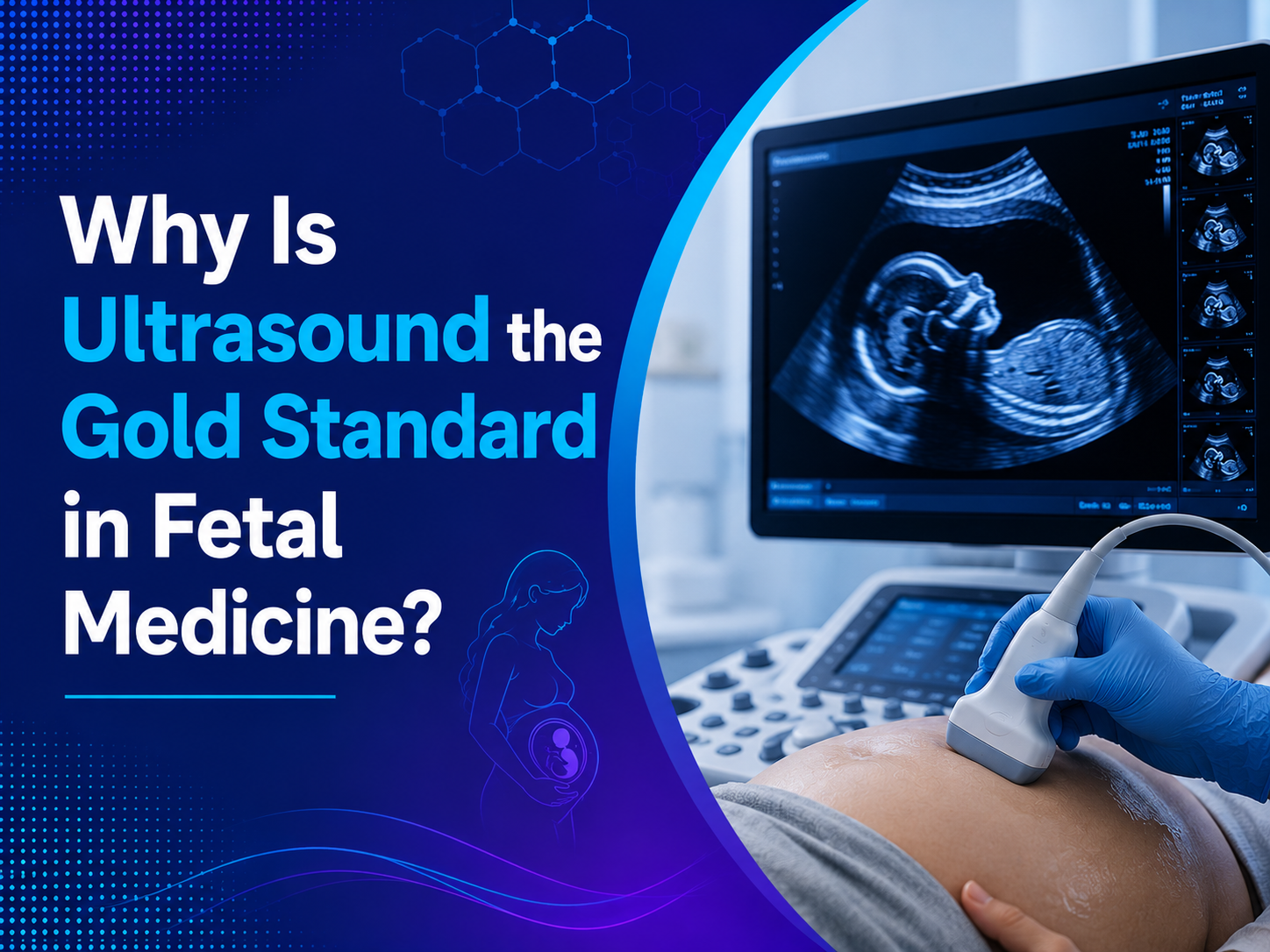
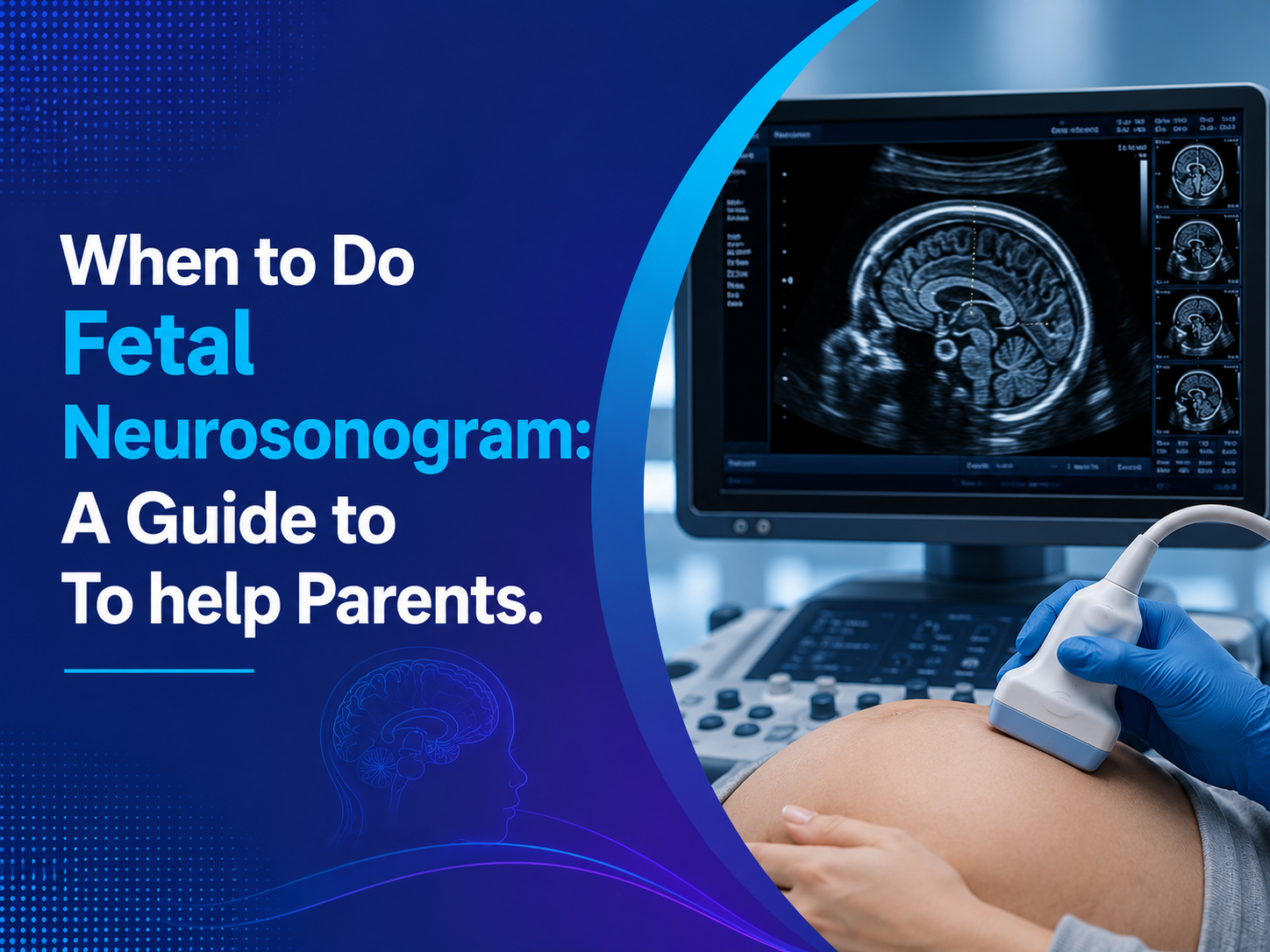
Done at 18 to 22 weeks, this detailed ultrasound examines the baby’s brain, heart, spine, face, limbs, and organs. It also checks the placenta and amniotic fluid. When extra detail is needed, 3D/4D Targeted Imaging in Indore can give clearer views of specific structures.
8. Glucose Screening for Gestational Diabetes
Between 24 and 28 weeks, you drink a glucose solution and a blood sample is taken. If the result is high, a longer glucose tolerance test confirms or rules out gestational diabetes. Fasting rules differ between hospitals, so follow your doctor’s instructions.
Third Trimester: Pregnancy Related Tests 9 and 10
9. Growth Scan
A Growth Scan measures your baby’s size, position, and amniotic fluid, and checks the placenta. It helps doctors confirm healthy growth and plan delivery. High-risk pregnancies may need these scans more often.
10. Group B Strep Swab
At about 36 to 37 weeks, a simple swab checks for Group B strep bacteria. If the result is positive, antibiotics during labor help protect the baby from infection. The test is quick and painless.
Warning Signs That Need Prompt Attention
Do not wait for your next scheduled test if you notice any of these.
- Heavy vaginal bleeding
- Severe or constant abdominal pain
- Reduced baby movements
- Severe headache with blurred vision or sudden swelling
- High fever
Other Pregnancy Related Tests Your Doctor May Add
Depending on your history, your doctor may also suggest:
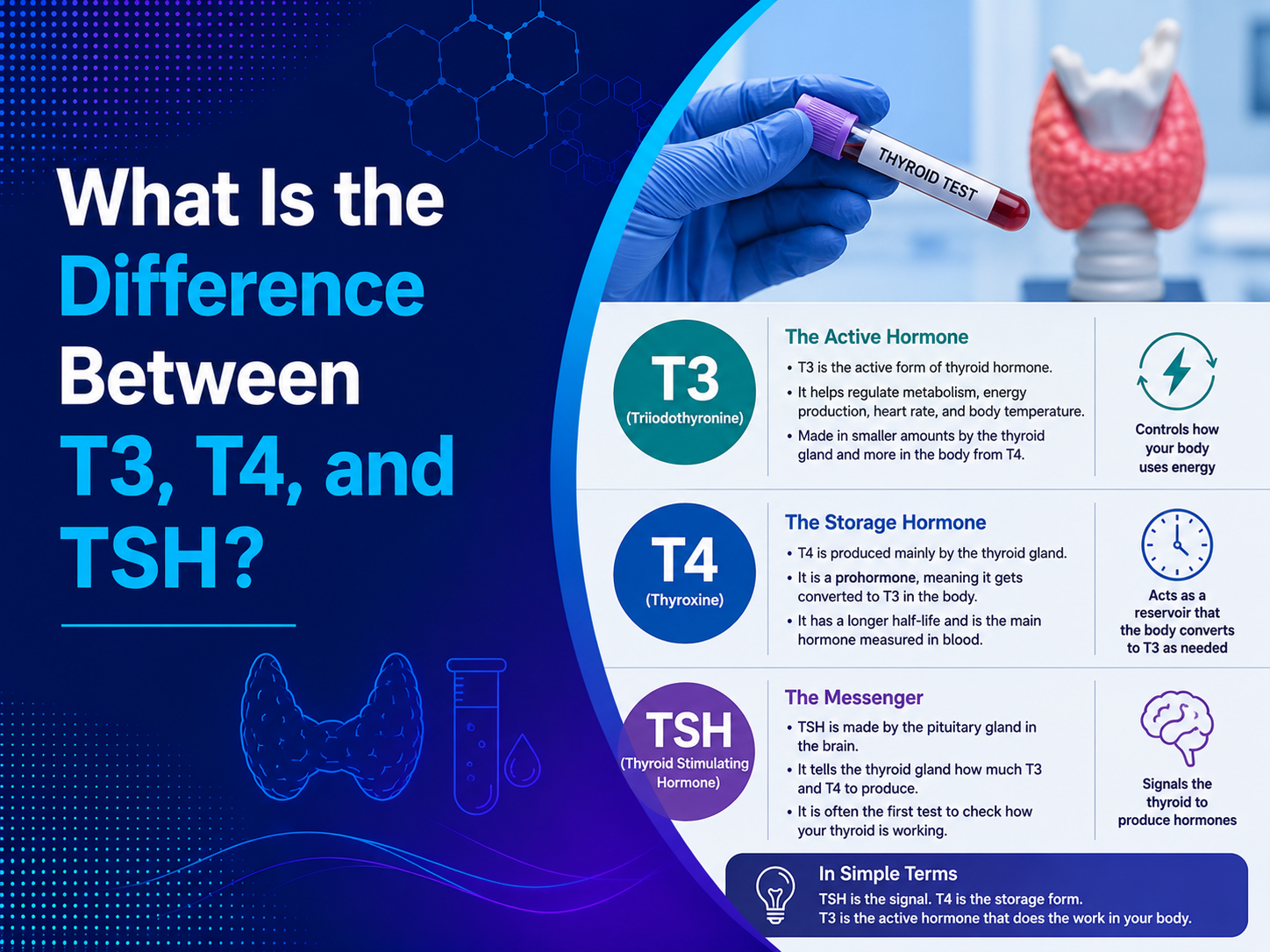
- A thyroid test (TSH)
- Non-invasive prenatal testing or a quad screen
- Fetal echocardiography when there is a heart risk
- Doppler scans for high-risk pregnancies
- Repeat blood counts or vitamin level checks
Planning Your Pregnancy Scan Schedule
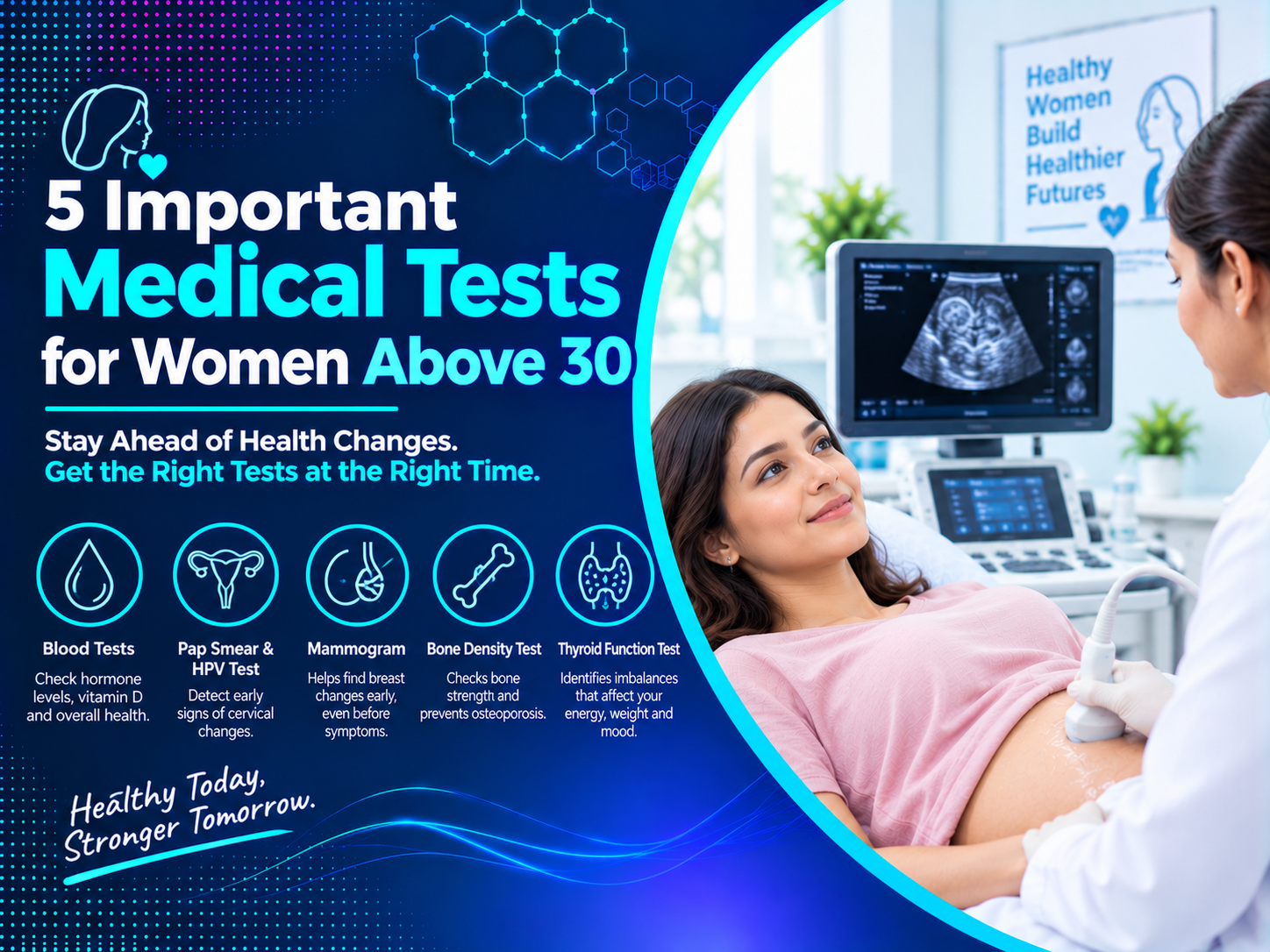
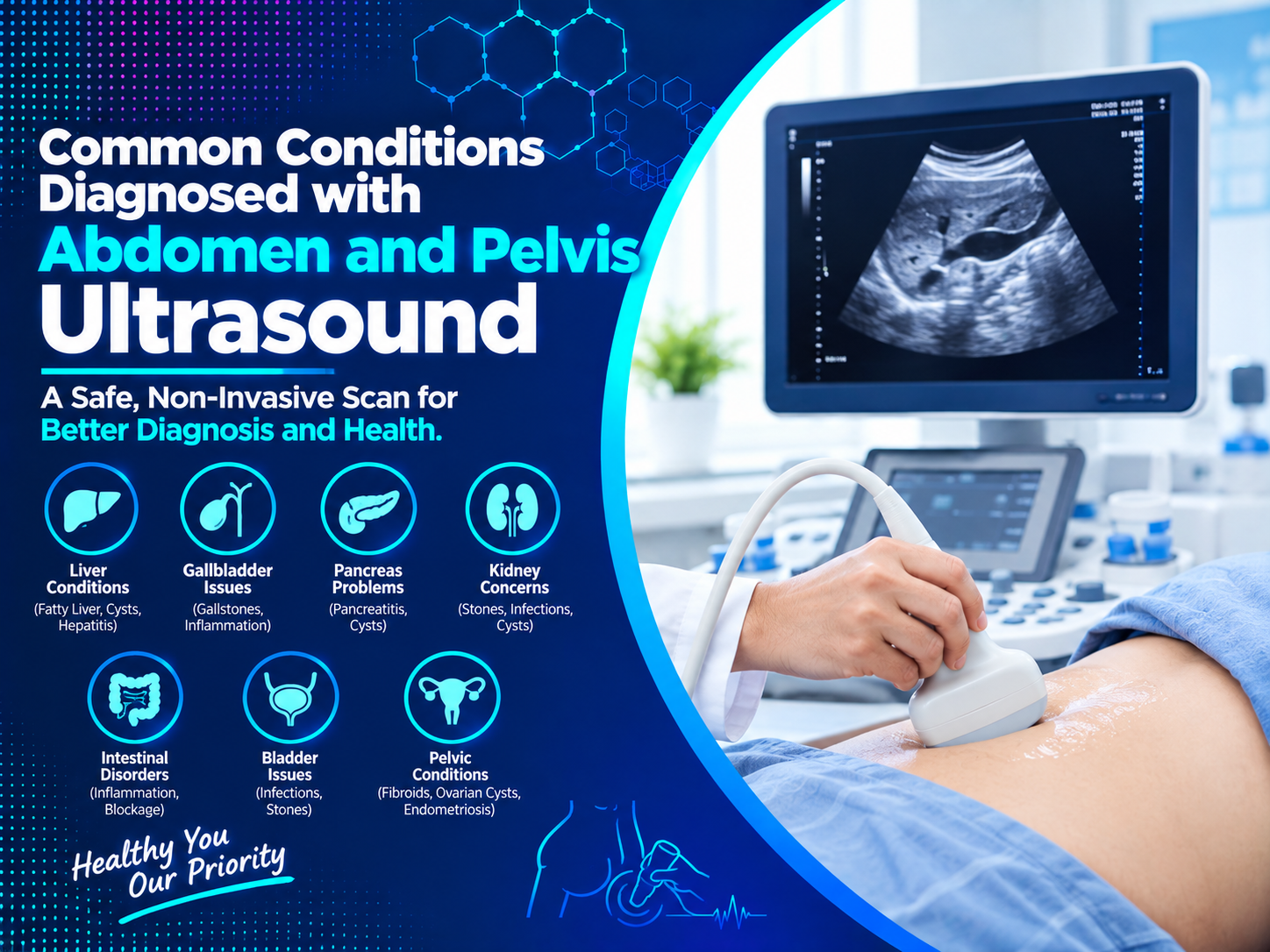
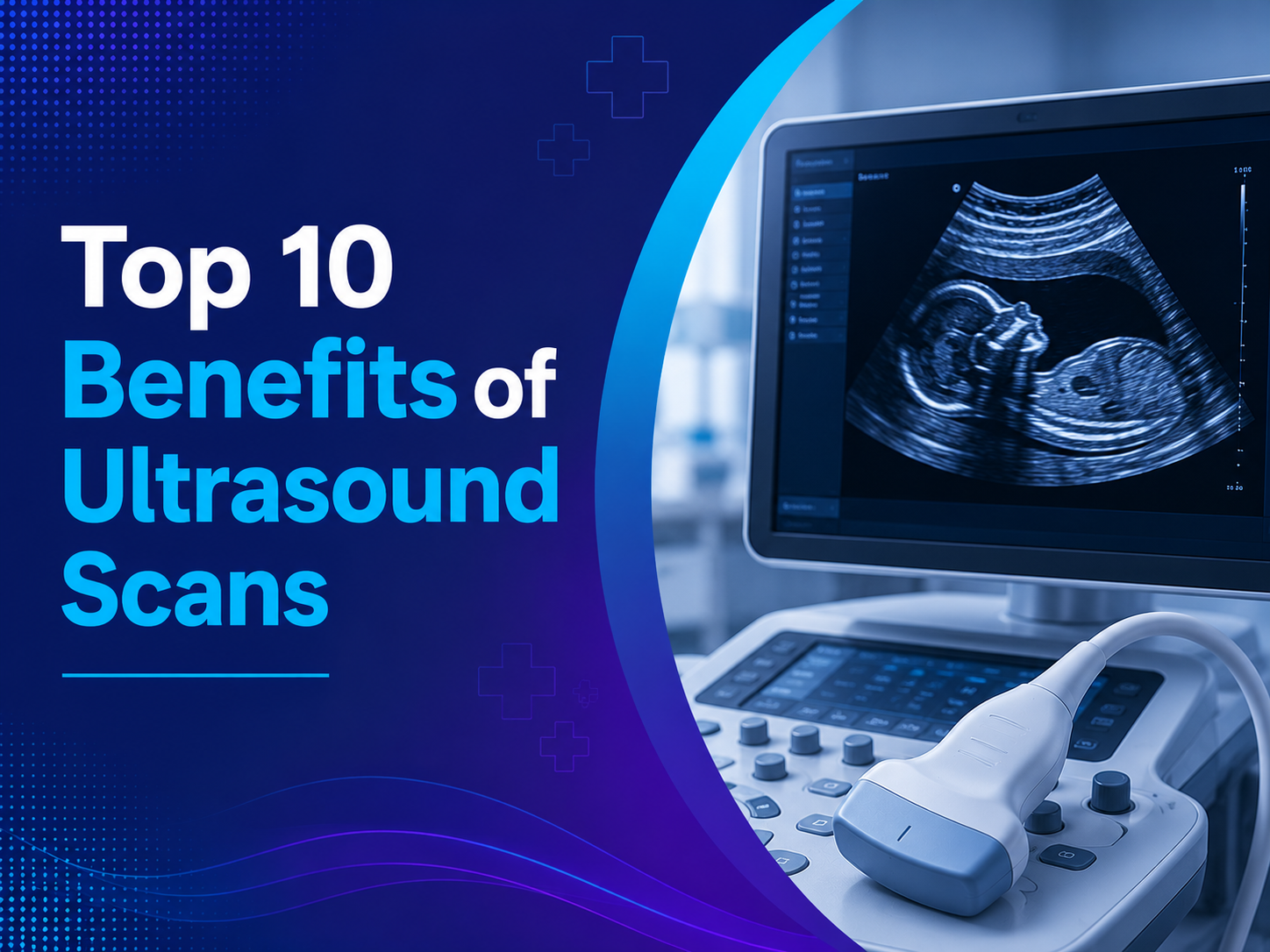
Most pregnancies include several scans: an early dating scan, a screening scan at 11 to 13 weeks, an anomaly scan, and a growth scan later. Families searching for Sonography in Indore should confirm which scans their doctor wants and book each within its time window. Book early, since the 11 to 13 week and 18 to 22 week windows are short.
Why Scan Quality Matters
Pregnancy scans depend on skilled sonographers and good equipment. A dedicated GYNAE Pregnancy Sonography Centre in Indore is experienced in fetal imaging and can explain what each scan shows.
Tips to Prepare for Your Pregnancy Tests
- Carry your previous reports and prescriptions.
- Ask whether you need to fast or have a full bladder.
- Wear comfortable clothing for scans.
- Write down your questions for the doctor.
- Use one Diagnostic Centre in Indore for your tests so your reports stay together, because your doctor may compare results across visits.
Choosing Where to Get Tested
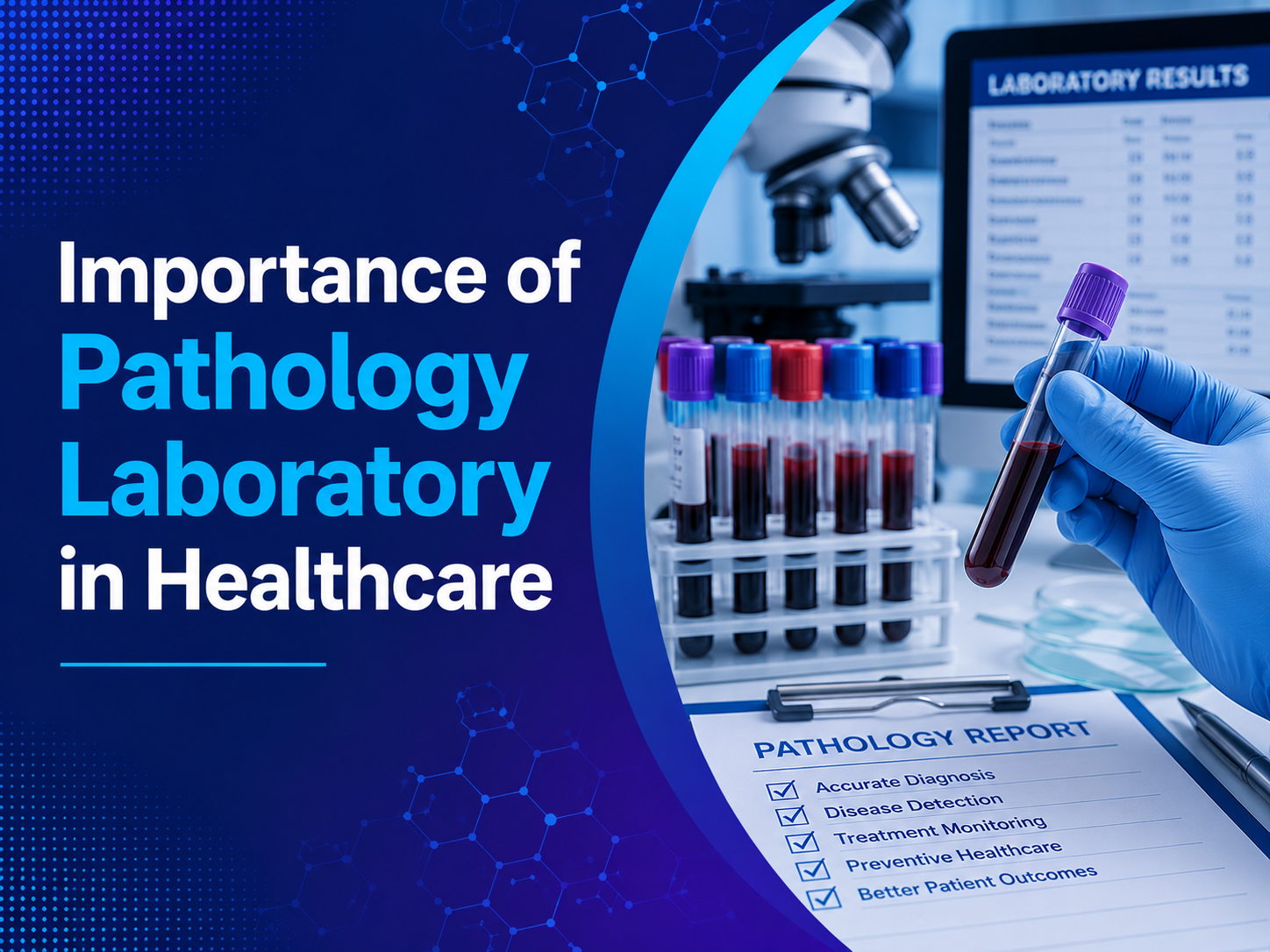
Look for trained staff, clear reports, and both scans and blood tests in one place. Many expecting mothers searching for the best diagnostic centre in Indore value this convenience. Ultrascan Diagnostic Centre offers pathology and pregnancy imaging services, so related tests can be planned together.
Frequently Asked Questions
1. Which pregnancy tests are most important?
Blood group and Rh factor, a blood count, infection screening, urine tests, the anomaly scan, glucose screening, and the Group B strep swab are widely recommended.
2. When should I take the first pregnancy test?
You can test once your period is late. A blood test may detect pregnancy slightly earlier than a home kit.
3. How many ultrasounds will I need?
Most healthy pregnancies have three to four, including an early scan, a screening scan, an anomaly scan, and a growth scan.
4. Are pregnancy tests safe for the baby?
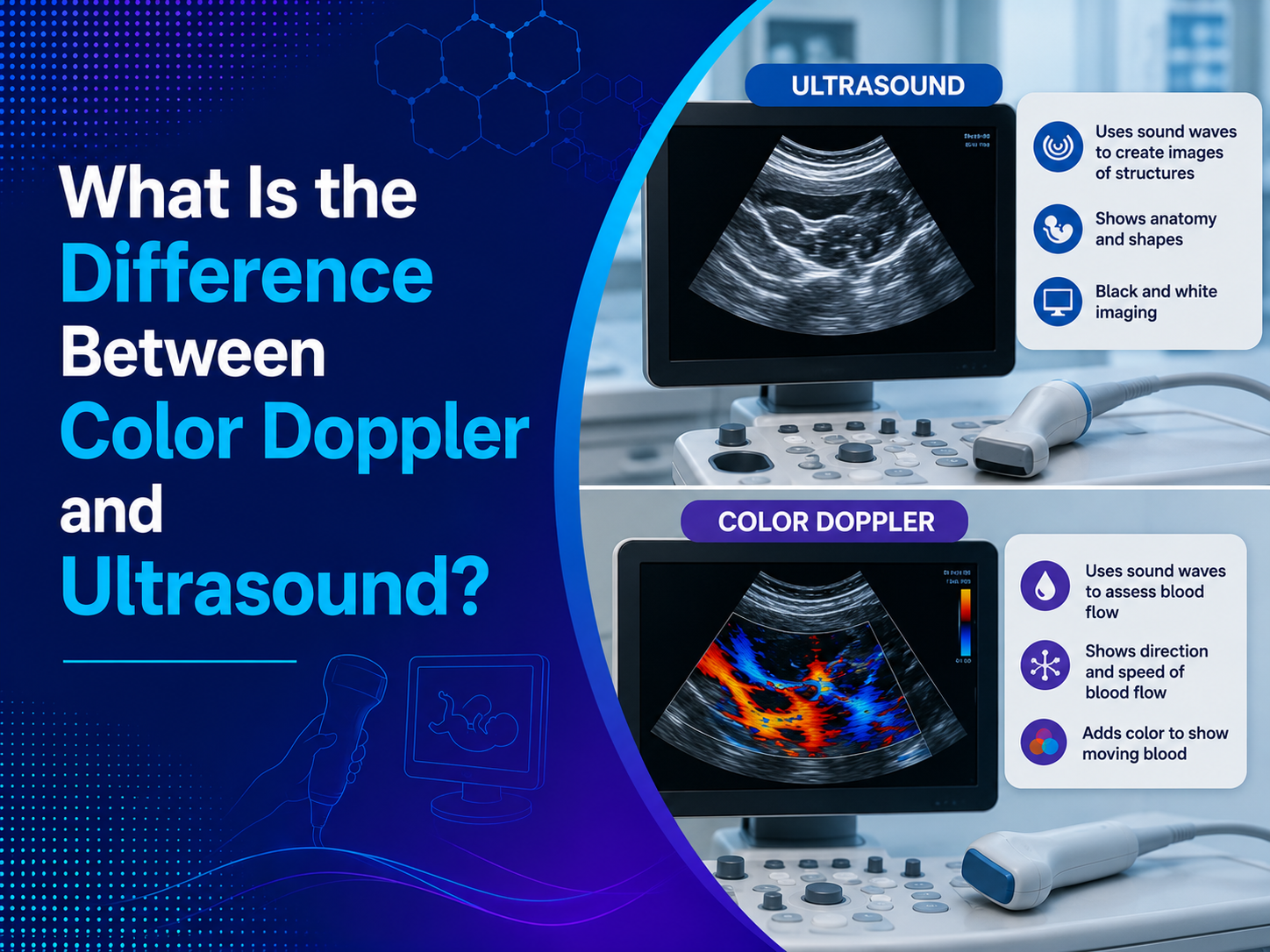
Blood, urine, and swab tests are safe, and ultrasound uses sound waves rather than radiation.
5. Do I need all ten tests?
Your doctor decides based on your age, health, and history. Some women need extra tests, and others need fewer.
Conclusion
The 10 Pregnancy Related Tests above give you and your doctor a clear picture at every stage. Each one has a purpose and a best time, so planning ahead keeps the journey calm and well monitored.
Book your pregnancy tests and scans at Ultrascan Diagnostic Centre today. Call ahead or walk in to plan your schedule. This article is for general information and does not replace advice from your gynecologist.