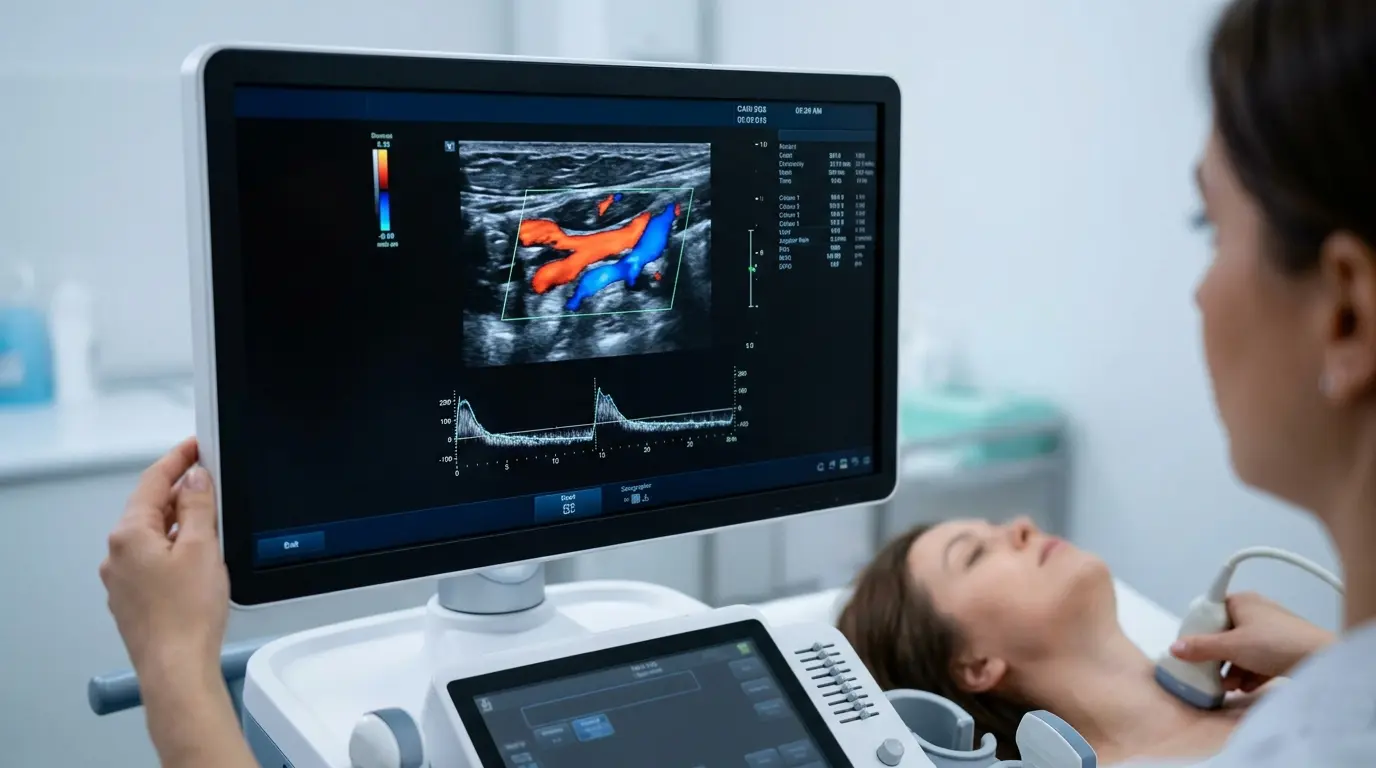
If your doctor has asked you to get a Doppler test, you may be wondering – why would a doctor recommend a Colour Doppler Scan and what exactly will it show? It is a completely fair question, and the answer is simpler than you might expect.
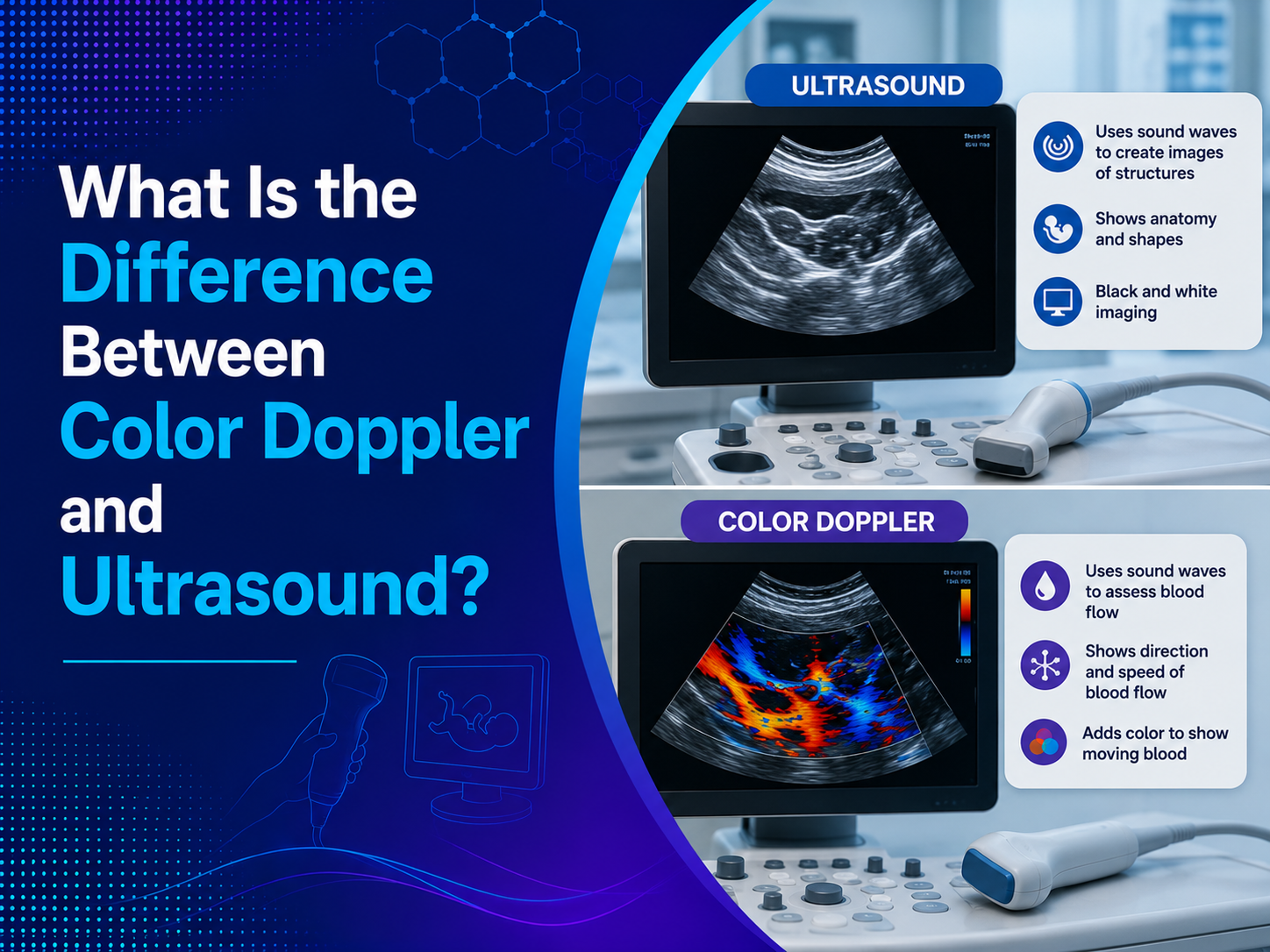
A Colour Doppler ultrasound is a non-invasive imaging test that uses sound waves to visualise how blood flows through the arteries and veins in your body. Unlike a regular ultrasound that shows the structure of organs, a Colour Doppler adds a layer of information – it maps blood movement in real time, using colour to show direction and speed.
Doctors recommend this test to evaluate blood vessel health, detect blockages, monitor organ function during pregnancy, and diagnose conditions affecting circulation. At Ultrascan Diagnostics, Indore, we provide precise and timely Colour Doppler ultrasound services – from obstetric scans to portal doppler test in Indore and renal doppler test in Indore – all under one roof.
What Is a Colour Doppler Ultrasound and How Does It Work?
A Colour Doppler ultrasound uses the Doppler effect – the same principle that makes a passing ambulance’s siren sound different as it moves toward and away from you – to measure how fast blood is moving and in which direction. The scanner translates this data into colour-coded images overlaid on a standard ultrasound picture.
Typically, the colours red and blue represent blood flowing toward and away from the probe respectively. The brightness of the colour indicates speed – brighter shades mean faster flow. This makes abnormalities like blockages, narrowing, or reversed blood flow immediately visible.
The procedure is completely safe, involves no radiation, causes no discomfort, and requires no injections. A gel is applied to the skin, and a handheld probe is gently moved over the area being examined. Most scans take between 20 and 45 minutes.
Why Would a Doctor Recommend a Colour Doppler Scan? The Most Common Reasons
Doctors across multiple specialties – cardiology, obstetrics, nephrology, and general medicine – recommend this scan for a wide range of conditions. Here are the most common clinical reasons:
1. To Check Blood Flow in Arteries and Veins
If you experience leg pain, swelling, or numbness, your doctor may suspect a blood clot (deep vein thrombosis or DVT) or arterial narrowing. A peripheral Colour Doppler scan of the upper or lower limbs checks the veins and arteries for clots, blockages, or reduced circulation – conditions that, if left untreated, can lead to serious complications.
2. To Assess Carotid Artery Health
The carotid arteries supply blood to the brain. If these arteries develop plaque buildup or narrowing (stenosis), the risk of stroke increases significantly. A carotid Colour Doppler scan helps detect these changes early – often before any symptoms appear – giving doctors time to act with lifestyle changes or medication.
3. To Evaluate the Kidneys – Renal Doppler Test in Indore
A renal doppler test in Indore – or renal Colour Doppler scan – assesses blood flow through the kidney arteries and veins. Doctors recommend this test when a patient has uncontrolled high blood pressure (hypertension) that does not respond well to medication, as it may indicate renal artery stenosis (narrowing of the kidney arteries).
4. To Examine the Liver and Portal Circulation – Portal Doppler Test in Indore
A portal doppler test in Indore evaluates blood flow through the portal vein – the major vessel that carries blood from the intestines and spleen to the liver. Doctors request this scan when they suspect portal hypertension (elevated pressure in the portal vein), cirrhosis, liver disease, or conditions like Budd-Chiari syndrome.
The scan can detect abnormal blood flow direction, the presence of collateral vessels (alternative routes blood takes when the portal vein is obstructed), and assess the severity of liver disease progression.
5. To Monitor Pregnancy and Foetal Health
Obstetric Colour Doppler is one of the most important tools in pregnancy monitoring. Doctors recommend it when they want to assess blood flow through the umbilical cord, placenta, and foetal brain and heart. Abnormal flow patterns can indicate conditions such as foetal growth restriction, placental insufficiency, or pre-eclampsia.
This scan is particularly recommended in high-risk pregnancies – multiple pregnancies (twins/triplets), gestational diabetes, hypertension during pregnancy, or previous pregnancy complications.
6. To Evaluate Scrotal and Testicular Blood Flow
A scrotal Colour Doppler scan is used to evaluate conditions like testicular torsion (twisting of the testicle that cuts off blood supply – a medical emergency), varicocele (enlarged veins in the scrotum that can affect fertility), epididymo-orchitis (infection and inflammation), and testicular tumours.
Conditions Diagnosed with Colour Doppler Ultrasound – A Quick Reference
Here is a summary of the conditions most commonly identified through a Colour Doppler scan:
• Deep Vein Thrombosis (DVT) – blood clots in leg or arm veins
• Peripheral Artery Disease (PAD) – narrowing of arteries supplying the limbs
• Carotid artery stenosis – a key stroke risk factor
• Renal artery stenosis – a cause of resistant hypertension
• Portal hypertension and liver cirrhosis complications
• Foetal growth restriction and placental dysfunction in pregnancy
• Testicular torsion and varicocele in men
• Varicose veins and venous insufficiency
• Abdominal aortic aneurysm (AAA) – abnormal bulging of the main abdominal artery
• Post-operative monitoring of blood vessel grafts or transplanted organs
The breadth of this list demonstrates why the Colour Doppler scan is one of the most versatile diagnostic tools in modern medicine. It provides critical information across cardiology, obstetrics, urology, hepatology, and vascular surgery.
How Do You Prepare for a Colour Doppler Ultrasound?
Preparation varies depending on the area being scanned:
• Portal Doppler / Abdominal Doppler: Fasting for 4–6 hours before the scan is usually required to reduce gas in the abdomen, which can obscure the view of abdominal vessels.
• Renal Doppler: Adequate water intake is often recommended to ensure the kidneys and surrounding vessels are clearly visible. Your radiologist will advise you specifically.
• Obstetric / Peripheral / Carotid / Scrotal Doppler: No special preparation is usually needed. Wear comfortable, loose clothing for easy access to the scan area.
• Medications: Continue all regular medications unless your doctor specifically advises otherwise.
At Ultrascan Diagnostics, our staff always provide clear pre-scan instructions at the time of booking, so you arrive fully prepared and your scan produces the most accurate results possible.
Is a Colour Doppler Scan Safe? What You Need to Know
Yes – Colour Doppler ultrasound is considered one of the safest imaging modalities available. It uses sound waves, not radiation, making it suitable for patients of all ages, including pregnant women, children, and elderly patients.
The American Institute of Ultrasound in Medicine confirms that diagnostic ultrasound, including Colour Doppler, has an excellent safety record and no confirmed harmful effects on human tissue when used appropriately by trained professionals.
There are no known side effects, no recovery time, and no need to fast in most cases. The scan can be repeated as often as clinically necessary, making it ideal for ongoing monitoring of chronic conditions.
Looking for Colour Doppler Ultrasound Near? Here Is Why Ultrascan Diagnostics Stands Out
If you have searched for colour doppler ultrasound near me and are based in or around Indore, Ultrascan Diagnostics at Pipliyahana is your most reliable option. Here is what sets us apart:
• Advanced Equipment: We use high-resolution Colour Doppler machines that deliver sharp, clear imaging for accurate diagnosis across all body areas.
• Expert Radiologists: Our scans are performed and interpreted by MD-qualified radiologists – Dr. Brajendra Singh Rawat and Dr. Hemlata Mujalda – with extensive experience in vascular, obstetric, and abdominal Doppler imaging.
• Comprehensive Doppler Services: We offer obstetric Doppler, carotid Doppler, renal doppler test in Indore, portal doppler test in Indore, peripheral Doppler, and scrotal Doppler – all under one roof.
• Fast, Accurate Reports: Timely reporting means your treating doctor gets the information needed quickly, without unnecessary delays in your care.
• Patient-Friendly Environment: We prioritise your comfort and privacy at every step, with a calm, hygienic, and well-designed centre.
• Affordable Pricing: Quality diagnostic imaging should not be out of reach. Our pricing is transparent and competitive.
Whether you need a standalone Doppler scan or a comprehensive diagnostic package, we are equipped to serve you. The Radiological Society of North America emphasises that Doppler ultrasound is most valuable when performed by experienced professionals on well-maintained equipment – exactly the standard we uphold at Ultrascan Diagnostics.
Frequently Asked Questions About Colour Doppler Scans
Q1. Why would a doctor recommend a Colour Doppler Scan during pregnancy?
An obstetric Colour Doppler scan is recommended when a doctor needs to assess blood flow between the mother and the baby. It evaluates the umbilical artery (which carries blood from the placenta to the baby), the middle cerebral artery (which supplies the baby’s brain), and the uterine arteries (which supply the placenta). If blood flow is reduced or reversed in any of these vessels, it can signal foetal distress, growth restriction, or placental problems. This allows the doctor to make timely decisions – such as close monitoring, early delivery, or medication – to protect both mother and baby. It is particularly recommended in high-risk pregnancies involving hypertension, diabetes, twin pregnancies, or a history of stillbirth.
Q2. What is the difference between a regular ultrasound and a Colour Doppler scan?
A regular ultrasound (B-mode or greyscale ultrasound) produces two-dimensional images of organs and tissues – it shows their size, shape, and texture. A Colour Doppler scan goes a step further by adding information about blood flow. It uses colour coding to show whether blood is moving toward or away from the probe, and how fast it is moving. This makes Colour Doppler essential for evaluating blood vessels, detecting clots or blockages, assessing organ perfusion (how well blood is reaching an organ), and monitoring foetal circulation. Think of it as an upgrade: a regular ultrasound shows you the structure of a building, while a Colour Doppler shows you the plumbing inside it.
Q3. How long does a Colour Doppler scan take, and will it hurt?
A Colour Doppler scan is completely painless. A water-based gel is applied to the skin to help the probe make good contact, and the sonographer gently moves the probe across the area being examined. There is no discomfort involved, and no injections or needles are used. The duration depends on the type of scan – most peripheral, renal, or portal Doppler scans take between 20 and 40 minutes. Obstetric Doppler scans are usually completed within 30 minutes. After the scan, you can resume all normal activities immediately with no recovery period required.